
Superior Menu Options Exist
A commercial flat roof is not a one-size decision. Liquid coatings, tPo, vinyl, and legacy rubber are all real, built-to-last options, and knowing the difference is what keeps you from overpaying or under-protecting your building.

🔲 A commercial flat roof is not a one-size decision. Legacy Rubber, vinyl, and Conklin's liquid-applied coatings solve different problems for different roofs.
🔲 We do not install tPo. It depends on heat-welded seams holding up for decades, and a seam is always the weakest point in any system.
🔲 Vinyl and Conklin liquid systems are not interchangeable. One is a reinforced sheet product, the other cures into a seamless surface. A contractor blending the two is skipping a step you should ask about.
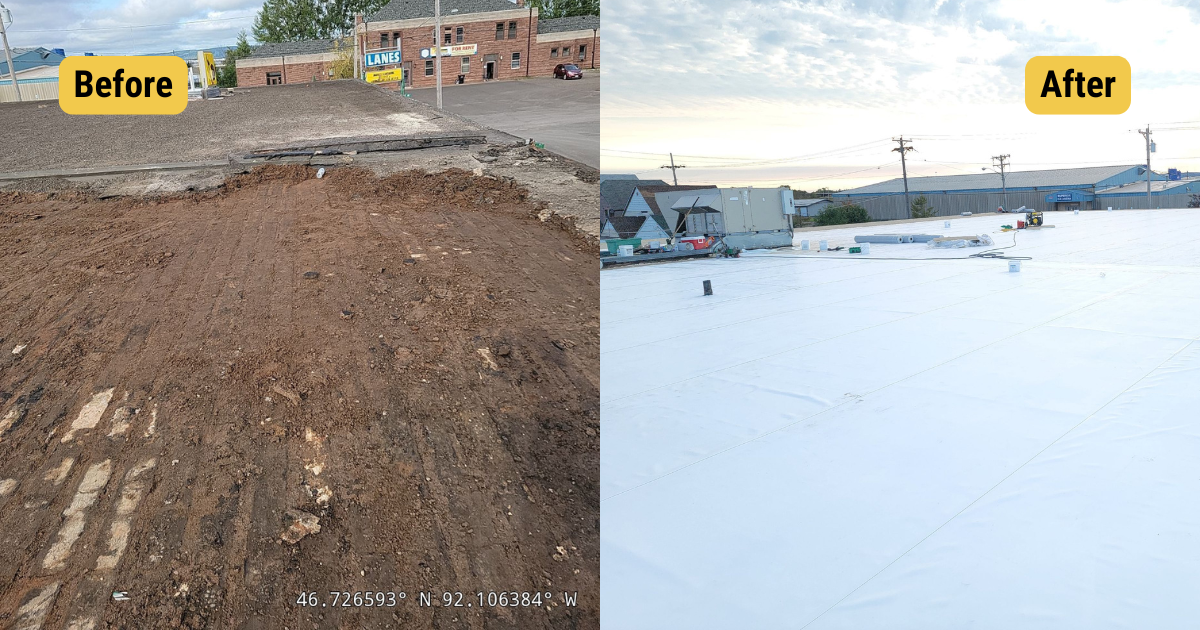
🔲 Aging EPDM doesn't always mean full replacement. Brittle rubber can often be recovered with a liquid-applied system instead of a tear-off.
🔲 Full replacement should be the last resort, not the default. It's the right call for real structural failure, but reaching for it too early wastes money a roof never actually required.
Your roof is failing, or it is close enough that you started looking. That is where this conversation actually begins, not with a sales pitch about materials nobody explained to you the first time around.
Maybe all you have ever heard is "rubber roof" or "that white plastic stuff." That is not a knock on you. Most building owners were handed one option years ago and never told there was a menu at all.
There is a menu. And knowing what is actually on it changes the whole decision.
Frequently Asked Questions
Q: What are the real commercial flat roof types available today?
A: Legacy Rubber (EPDM), flexible vinyl systems for chemical exposure, Conklin's liquid-applied seamless coatings, and full tear-off replacement. tPo exists in this market, but we do not install it, and we do not recommend it for the conditions this region puts a roof through.
Q: Why doesn't Pristine install tPo?
A: tPo depends on heat-welded seams holding up for the life of the roof, and a seam is always the weakest point in any system. Between freeze-thaw cycles and wind off the lake, we would rather put a roof under a system with no seams to fail in the first place.
Q: What is the difference between vinyl and a Conklin liquid-applied system?
A: Vinyl is a manufactured, reinforced sheet product installed as its own system. A Conklin system is applied wet and cures into a seamless, fabric-reinforced surface directly over the existing roof. They are not interchangeable, and a contractor who blends the two in one pitch is skipping a step you should ask about.
Q: Does an aging EPDM roof always need full replacement?
A: Not always. Expired rubber EPDM that has gone brittle can sometimes be recovered with a liquid-applied system instead of a full tear-off, depending on how much structural life the roof has left.
Q: When is full tear-off actually the right answer?
A: When the deck is compromised or the membrane has failed past the point recovery can address. Short of that, a recovery system is usually the more responsible and less disruptive choice.
Q: How do I know which system is right for my specific building?
A: By having someone walk the roof and evaluate its actual condition, rather than comparing price quotes for systems that were never solving the same problem.
Bill's Situation Is The Usual One
Bill owns a building. The roof is old enough to worry about, not old enough to have failed outright, and nobody has walked him through what his real choices are.
He has heard of rubber. Somebody mentioned tPo once during a bid. He has no idea what Conklin means, what a liquid-applied system actually does, or why one contractor quoted him a third of what another one did for what sounded like the same job.
That gap, between what an owner has heard and what actually exists, is where bad decisions get made. Not because Bill is careless. Because nobody laid out the menu before asking him to order.
Legacy Rubber, The Option Most People Already Know
EPDM is the material most building owners already recognize, even if they only know it as "the black rubber roof." It has been around for decades, and it earned its reputation honestly. It is a proven, dependable membrane that has covered more commercial roofs than almost anything else on this list.
It is also aging. A lot of EPDM roofs in this region are well past the point where the rubber still has its original flexibility. Expired rubber EPDM gets brittle, seams start to separate, and the membrane that used to move with the building starts fighting it instead.
That does not mean rubber is a bad option. It means an aging EPDM roof needs an honest look before anyone assumes it just needs a patch. Sometimes it does. Sometimes it needs a full recovery.

Plastic Wrap tPo, The Newer Standard
tPo is what most people mean when they say "plastic roof," and it has become the default choice on a lot of new commercial builds. It is reflective, it handles heat well, and the seams are heat welded instead of glued, which gives it a stronger bond than older sheet systems.
The tradeoff is that tPo is only as good as its installation. A seam that was not welded correctly does not announce itself right away. It shows up two years later as a slow leak nobody can trace back to the source.
For a building owner comparing bids, tPo sits in the middle of the menu. It is a real, modern option, not a downgrade and not a luxury upgrade. It is simply the standard plastic membrane most contractors are installing today, done right or done carelessly depending on who is holding the welder.
Flexible Vinyl Blanket, The Option Built For Chemical Exposure
Vinyl, specifically the flexible vinyl systems built for demanding commercial environments, is a different tier entirely. This is the option that shows up when a building has rooftop grease exposure, chemical exposure, or an industrial process that would eat a lesser membrane alive.
Vinyl is not interchangeable with the liquid-applied systems Conklin builds. That distinction matters. Vinyl is a manufactured, reinforced sheet product installed as its own system. Conklin's liquid-applied coatings are a different built-to-last grade entirely, applied wet and cured into a seamless surface. Keeping those two straight is not a technicality. It changes what a warranty covers, what a repair looks like ten years in, and which system actually solves the problem in front of you.
Val, if you are comparing bids before a meeting, this is the line to watch for. A contractor who blends vinyl and Conklin liquid systems together in one pitch either does not understand the difference or is hoping you won't ask.

Seamless Coatings, The Conklin liquid-applied System
This is the option most building owners have never had explained to them properly, and it is often the best fit for a roof that is aging but not yet failed.
A Conklin liquid-applied system goes down as a fabric-reinforced coating directly over the existing roof. No tear-off, no rolled sheets, no seams for wind or ice to work against. It cures into one continuous surface that wraps corners, edges, and rooftop penetrations into a single skin instead of a collection of joined pieces.
This is built-to-last grade work, engineered specifically for what the material has to survive, not a generic elastomer applied and hoped into place. For a roof that still has structural life left in it, a Conklin system often resets the clock without the cost or disruption of a full replacement.
Legacy Tear-Off and Full Replacement, When It Is Actually Necessary
Sometimes a roof genuinely has nothing left to work with. Deck damage, structural compromise, or a membrane so far gone that recovery is not realistic all point to one answer: tear off, rebuild, and start over with a system designed for maximum lifespan.
This is the most expensive option on the menu, and it is also the right call more often than owners want to admit. The mistake is reaching for full replacement as the default answer instead of the last resort. A roof that could have been recovered with a Conklin system does not need to be torn off, and an owner who tears off too early is paying for a decision the roof never actually required.
✉️ Every roof on this menu earns its place except one. Yours is worth a real look before you assume which one it needs.
Drop your address below. FREE evaluation. No sales pitch. No pressure.
Subject Property Address: ___________________________
[ Email address ] → [ Send Me the Real Stuff ]
Why This Menu Matters More Than The Price Alone
Every contractor who has ever quoted Bill a number was quoting a specific system, whether they explained that or not. Comparing prices without comparing systems is how an owner ends up thinking one bid is a rip-off and another is a steal, when really they were never quotes for the same job.
Here is where we will be honest instead of polite. tPo shows up on a lot of menus because it is cheap to install fast, not because it is the right long-term answer for a Northwest Indiana roof. The seams are only as good as the tech holding the welder that day, and a roof depending on dozens of heat-welded joints to stay dry is a roof with dozens of chances to fail. We do not install it, and we are not going to pretend it belongs next to Conklin's Seamless Coatings just because it is common.
Legacy Rubber, Vinyl, and Conklin's liquid-applied systems solve different problems for different roofs, and they solve them without betting the whole roof on a row of seams. A roof with chemical exposure needs vinyl's resistance. A roof that is aging but structurally sound is usually a strong candidate for a liquid-applied recovery. A roof with real structural failure needs a rebuild, no matter what a cheaper bid promised to save.
Knowing which category your roof actually falls into, before you compare a single number, is what keeps you from paying for a system that was never built to last on a roof like yours.
✉️ Get your specific roof matched to the right system.
Curious which option actually fits your building? Drop the address and we will walk the roof and tell you which system it calls for, not which one happens to be easiest to sell.
Subject Property Address: ___________________________
[ Email address ] → [ Send Me the Real Stuff ]
The Bottom Line
There is a real menu of commercial flat roof options, and knowing it changes everything about how you compare bids, budgets, and timelines. Legacy Rubber, vinyl, and Conklin's liquid-applied Seamless Coatings each earn their place for a different reason. tPo earns its place on other people's menus, not ours, and now you know why.
Bill does not need to become a roofing expert overnight. He just needs the menu laid out honestly, once, by someone willing to explain it instead of just quoting a number.
Val, forward this to whoever is sitting in that meeting with you. It answers the question before it gets asked.
Read other blog:


We Love Conversations
 SoHelpful@PristineIndustrialRoofing.com