
TPO Roof Coating in Hammond, Gary & Valparaiso Indiana | Pristine Industrial Roofing
Is your TPO roof in Northwest Indiana showing its age? Learn why the right coating system, not just any liquid, makes the difference between 10 years and 20. Free assessment available.
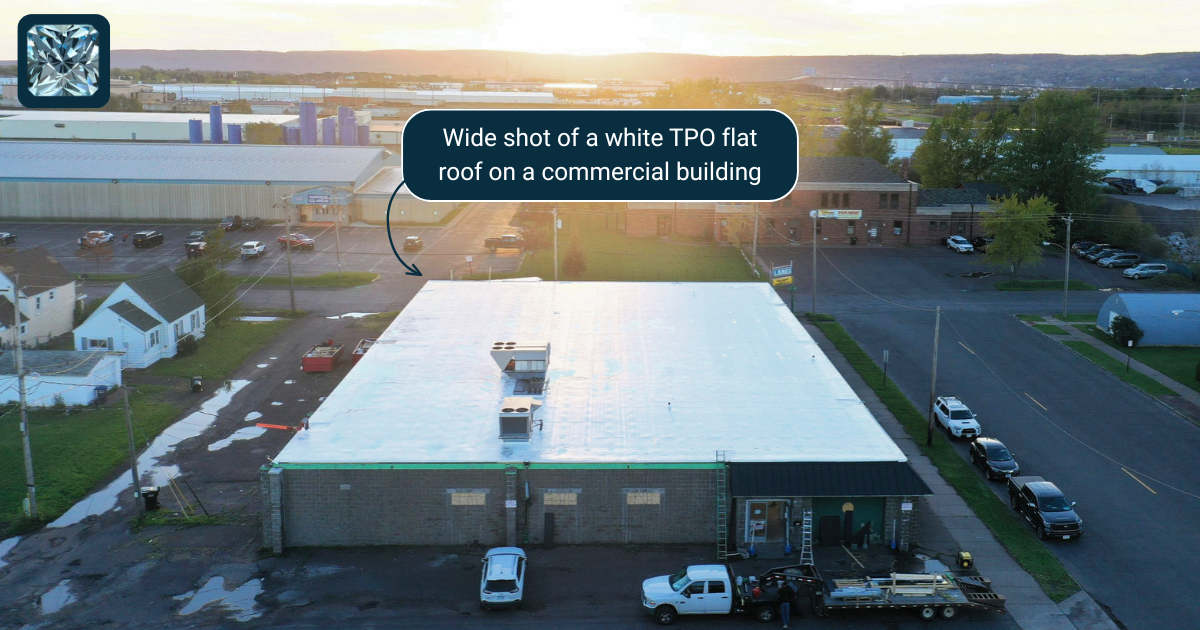
🔲 TPO Restoration Is More Than a Coating. Proper cleaning, priming, and seam reinforcement are critical for long-term performance.
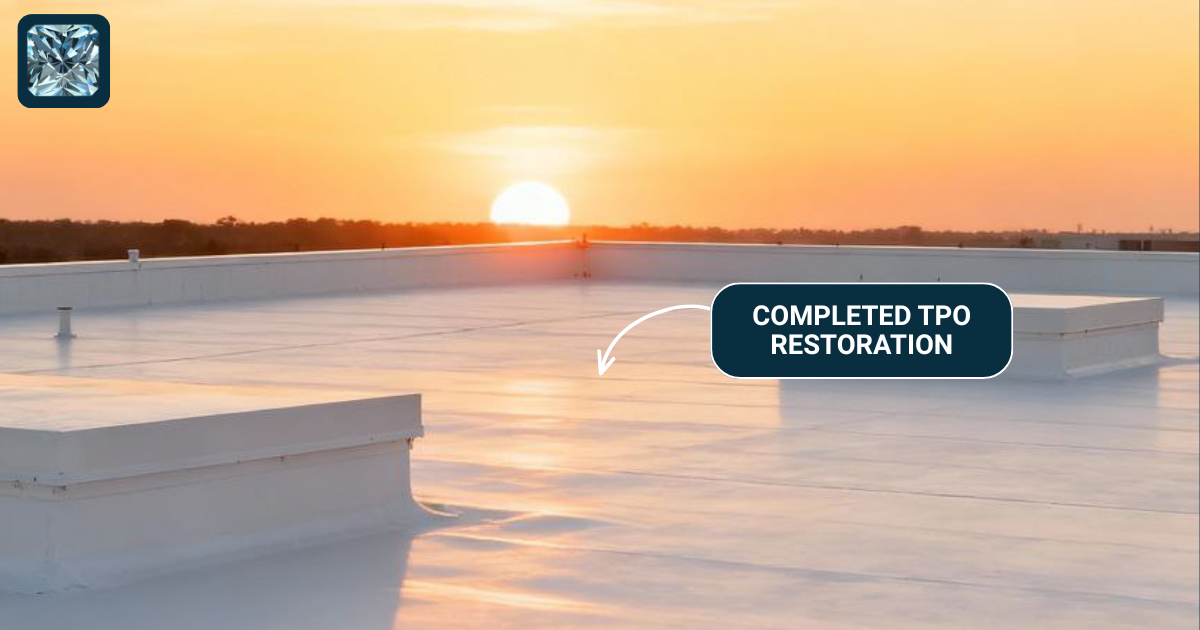
🔲 Restore Before Leaks Start. Preventive restoration can extend a TPO roof's life by up to 20 years while delaying costly replacement.
🔲 Northwest Indiana Roofs Face Tough Conditions. Freeze-thaw cycles, pollution, and lake-effect weather demand a restoration system built for the local climate.
Your TPO Roof Is Trying to Tell You Something. Are You Listening?
If you own or manage a commercial building in Hammond, Gary, East Chicago, or Valparaiso, and your roof is white, single-ply, and making you nervous every time it rains, there is a good chance you have a TPO roof. And there is an even better chance nobody has explained to you what that actually means for restoration, coating, and longevity.
We are going to fix that right now.
5 Things Northwest Indiana Building Owners Get Wrong About TPO Roofs
1. "Any coating will stick to it." It won't. TPO has something called low surface energy. In plain English: it is naturally slippery at a molecular level. Coatings that bond fine to concrete or modified bitumen will peel right off TPO if the surface isn't properly primed first. This is not an opinion. This is chemistry.
2. "It just needs a coat of white paint." TPO is not a paint problem. It is a system problem. The seams, the flashing around every pipe and AC unit, the drainage slope, these are what fail. Painting over a failing seam is like putting a bandage over a broken arm. Looks covered. Still broken.
3. "Silicone is the best option for a flat roof." Silicone is the most aggressively marketed option. It is not the best. Once silicone goes down, almost nothing bonds to it afterward. You are locked in, forever. And it gets slippery when wet. Ask your insurance carrier how they feel about that.
4. "If it's not leaking, it doesn't need attention." A TPO roof that isn't leaking yet is still degrading. UV breakdown, seam separation, and membrane shrinkage happen invisibly, until they don't. The best time to restore a TPO roof is before it fails, not during a Lake County rainstorm in April.
5. "All roofing contractors know TPO." They know what TPO is. That is different from knowing how to restore it properly. If your contractor skips the adhesion test, skips the primer, and goes straight to rolling on coating, you just bought yourself a very expensive peel.
Dad joke break: Why did the TPO roof go to therapy? Because it had serious adhesion issues and nobody ever properly primed it for the relationship.

What a Proper TPO Roof Restoration Actually Looks Like
Here is the sequence a qualified contractor follows. If yours skips any of these steps, ask why, out loud, in writing, before they start:
A. Moisture scan first. Every time. Trapped moisture under a coating system will expand, blister, and blow out. A visual inspection is not enough. Core cuts may be needed.
B. Full surface clean. Not a rinse. An actual chemical clean with proper cleaner, proper concentration, proper rinse, and a fully dry surface. Coating over a dirty or damp surface is a waste of everyone's money.
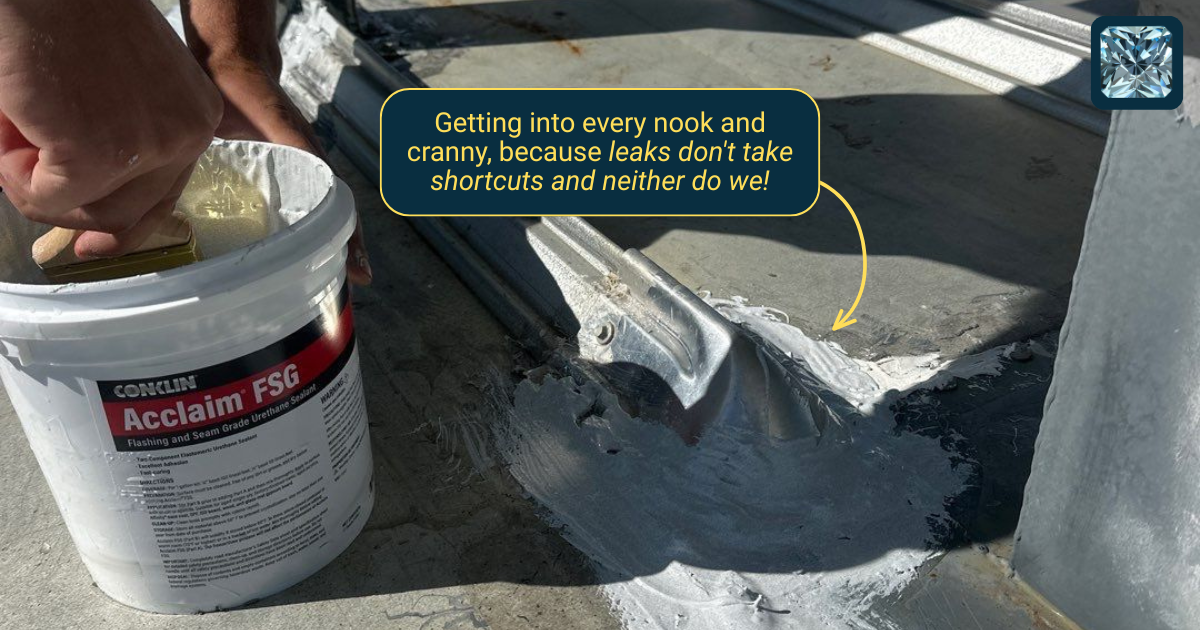
C. Every pipe, vent, AC unit, and rooftop unit gets individually addressed before coating begins. These are the highest-risk leak points on any flat roof. They get flashed and detailed, not buried under a roller pass.
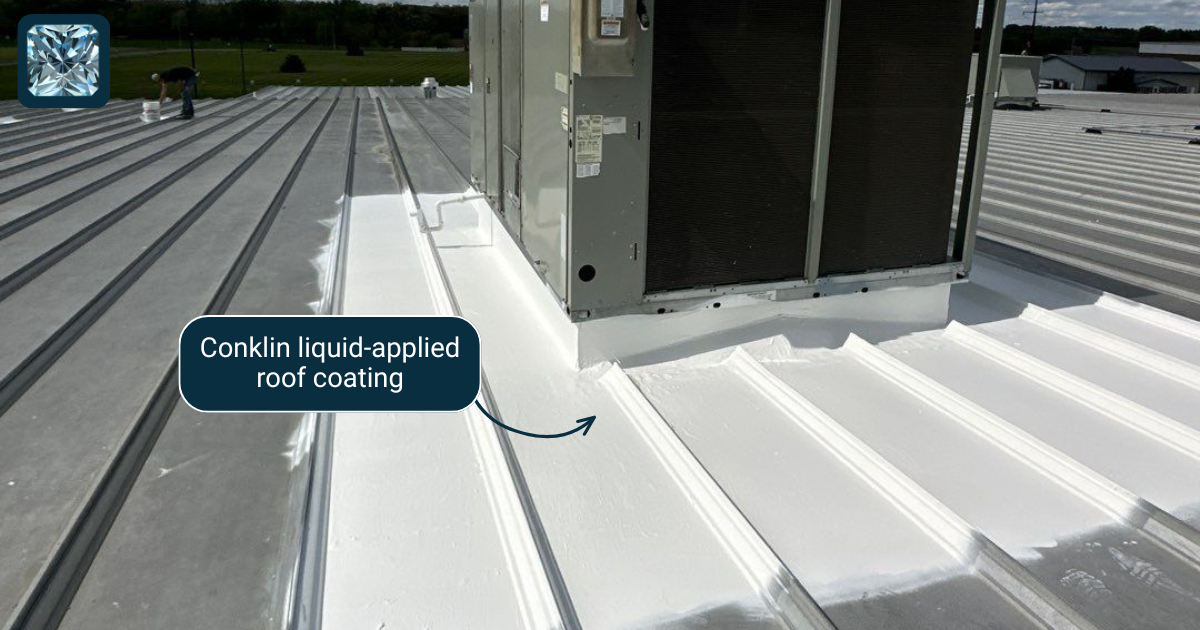
D. Primer goes down. On TPO, this is not optional. The primer is what solves the low-surface-energy problem. Our system uses a primer specifically formulated for TPO. Reinforcement mesh is embedded directly into the wet primer at every seam and flashing, not caulked over, not taped. Embedded.
E. Base coat at 1.5 gallons per square. Tinted so you can see coverage. No guesswork.
F. Finish coat at 1.5 gallons per square. Total system: 3.0 gallons per square minimum. Dry mil thickness documented and verified.
G. Warranty issued. In writing. Filed with the manufacturer. A 20-year NDL warranty on TPO is achievable, but only if every step above was followed correctly.
Why Northwest Indiana TPO Roofs Have It Harder Than Most
Gary, Hammond, East Chicago, and Portage are not gentle climates. The freeze-thaw cycle here is brutal. Industrial exhaust, air pollution from steel and refinery operations, and the wind off Lake Michigan put more stress on a commercial roof than most of the country sees. A 10-year restoration system that performs fine in Phoenix may underperform here.
This is why we do not sell generic. We assess the specific roof, the specific environment, and the specific chemistry needed. Then we install it correctly. Then we warrant it.
TPO vs. Full Replacement — When Does Restoration Make Sense?

Restoration makes sense when:
✓ The deck structure is sound — no rot, no compromise
✓ Moisture intrusion is isolated and can be removed before coating
✓ The membrane has not been previously coated with silicone (silicone locks you out of most systems)
✓ The building owner wants to defer full replacement cost while extending life 20 years
Full replacement makes more sense when:
✗ Moisture is widespread throughout the assembly
✗ The deck itself is structurally compromised
✗ Silicone has already been applied and adhesion tests fail across the board
✗ The roof is simply past the point of restoration, and a good contractor will tell you that honestly
We will tell you honestly if your roof needs replacement instead of restoration. A contractor who sells you a coating job on a roof that needed a tear-off is not saving you money. They are selling you a delay.
Serving These Northwest Indiana Cities for TPO Roof Restoration
Our TPO restoration crews regularly serve commercial and industrial properties in:
Hammond • Gary • East Chicago • Whiting • Portage • Merrillville • Crown Point • Valparaiso • Michigan City • Chesterton • Highland • Munster • Dyer • Lowell • St. John
Get a Free Commercial Roof Assessment
No pressure. No pitch. Just an honest evaluation of what your roof actually needs.
Pristine Industrial Roofing | Conklin Preferred Contractor | Northwest Indiana
Read other blog:


We Love Conversations
 SoHelpful@PristineIndustrialRoofing.com